Skip to Main Content
Brown University
The Warren Alpert Medical School

Department of Psychiatry and Human Behavior

Secondary Navigation Navigation

  • Give Now
Search Menu

Site Navigation

  • Home
  • About
    • Leadership
    • Administrative Staff
    • Affiliated Hospitals
    • Life in Providence
  • Research
    • Research Centers
    • Research Core Facilities and Resources
    • Research Affiliates
  • Education
    • Residency Programs
    • Fellowship Programs
    • Clinical Psychology Training Programs
    • Research Training
  • Clinical Programs
  • Faculty
    • Faculty Affairs
    • Faculty Awards
    • Find a Faculty Researcher
    • Find a Clinical Faculty Member
  • Belonging
    • Actions to Promote Belonging
    • Community and Belonging Council
    • Faculty and Trainee Resources
    • Communities of Rhode Island
  • News & Events
Search
Department of Psychiatry and Human Behavior

News Archive

  • 2026
  • 2025
  • 2024
  • 2023
  • 2022
  • 2021
Date October 9, 2026
All News
Share
Facebook Twitter_X Linkedin Email

Fifty Years of Excellence — from an Audacious Start

person laughing at party
Photo by David DelPoio

By any measure, Brown Psychiatry and Human Behavior has achieved remarkable reach.

The department runs no less than a dozen training programs across both psychiatry and psychology, graduating roughly 80 residents and fellows each year. They train in eight affiliated hospitals with outpatient, partial, and inpatient programs for both children and adults. They have access to the expert guidance of more than 500 faculty researchers and clinicians. And when they graduate, they join an international network of more than 2,200 alumni.

Yet for all its sprawling influence, the department preserves a core identity that can be traced to its earliest graduation, of just nine trainees, in 1976.

“We pride ourselves on excellence in research, clinical practice, and teaching,” said Department Chair Audrey Tyrka, M.D., Ph.D. “But our energies are rooted in one purpose: To care for our communities. That’s what drives us toward each new discovery, each patient-centered treatment.” 

Tyrka joined faculty, trainees, and five decades of alumni to celebrate that legacy at the department’s 50th anniversary of training in September. The two-day celebration at The Warren Alpert Medical School included a reunion party; storytelling from long-time and early-career faculty; academic presentations from alumni on the intersection of mental health, climate change, and AI; and roundtables grouping alumni mentors with current trainees. 

The event also featured a special exhibit of paintings, Resilience Rising, by the late artist Douglas Lee Brooks, who lived with schizophrenia. Brooks’ sister coordinated the exhibit for the 50th celebration to recognize the department’s long-time commitment to compassionate mental health care.
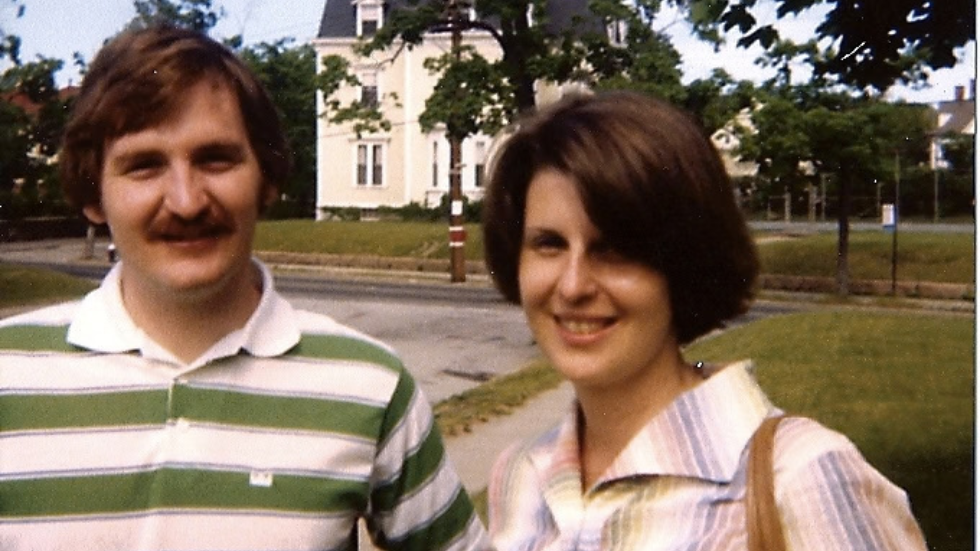
two people standing outside
1 of 2

Kelly Brownell (left) and Carol Landau (right) made up the first clinical psychology internship class along with Steven Hayes, Peter Monti, and Toy Caldwell-Colbert. All five went on to prominent academic careers. Photo courtesy of Carol Landau.

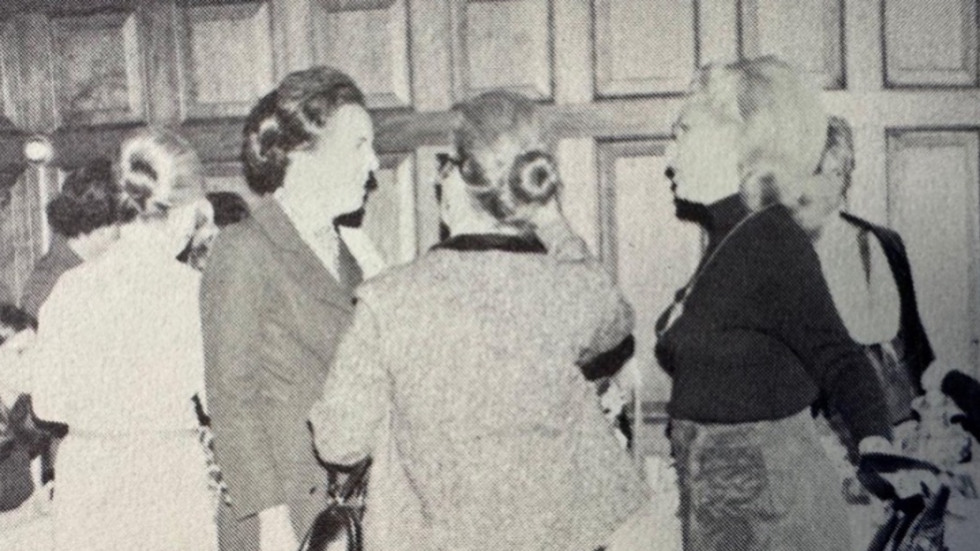
group of women
2 of 2

The department was not initially able to fund stipends for its first class of five clinical psychology interns, until the Butler Hospital Auxiliary (pictured here) stepped up to donate the needed $21,000. Photo courtesy of the Rhode Island Historical Society.

An Evidence-Backed Revolution

The department was also founded in values that made it radical for its time — and set its course to this day.

For one, the department’s first chair, Ben Feather, M.D., Ph.D., recruited faculty who were interested in incorporating scientific findings into clinical practice — a relative rarity in the 1970s, when Freudian psychoanalytic tradition still dominated the field.

“Cognitive and behavioral therapy was just on its way in,” said Tom Scaramella, M.D., the psychiatry residency’s first director. “There was still a not-small group of people who wanted to keep the old system, but the psychiatry residency was much more grounded in the new. It still had an emphasis on teaching psychotherapy skills, but not at all the analytic model.”

One of Feather’s early recruits was David Barlow, Ph.D., the first director of the clinical psychology internship. Barlow specifically designed the internship to allow research opportunities for trainees.

“The [first] interns came hoping they'd be able to do research and publish and move on to an academic position,” he said. “Every single one of those first five became full professors in a relatively short period of time.”

Today, it remains unusual for clinical training programs to include protected time for research. Yet the department has carried on its founding tradition: The psychology internship still features its distinctive research component, and psychiatry trainees now have access to research training thanks to two R25 grants from the National Institutes of Health.

They are training in a uniquely active hub of mental health research. Last year, the department attracted nearly $100 million in external research funding, making it one of the top-funded departments of psychology and psychiatry research in the nation.

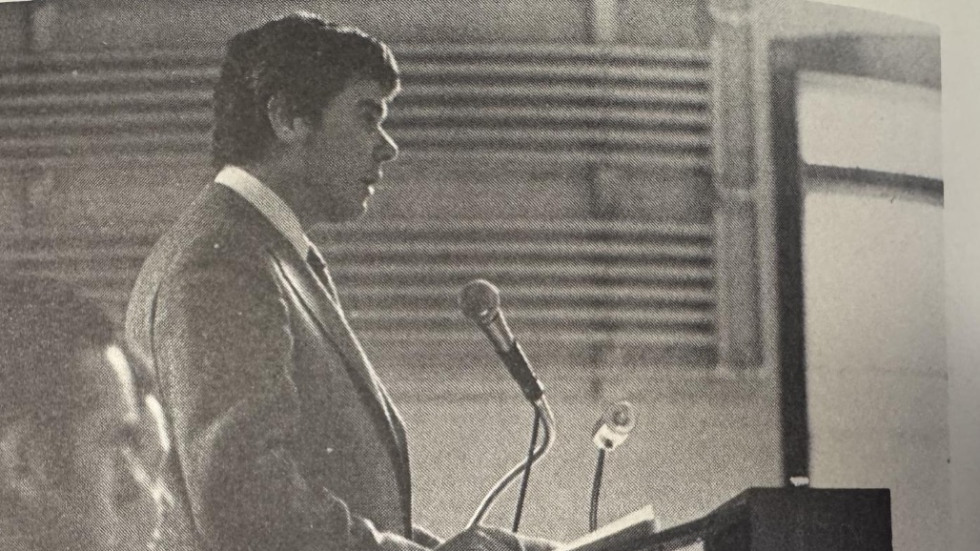
Ben Feather, MD, PhD, in profile at podium
1 of 2

Ben Feather initially came to Brown from Duke University to consult on the establishment of its new medical school. Later, he became the founding chair of the Section on Psychiatry and Human Behavior, as it was then called. Feather had trained in psychoanalysis, but also conducted research on behavioral conditioning. Photo courtesy of the Rhode Island Historical Society.

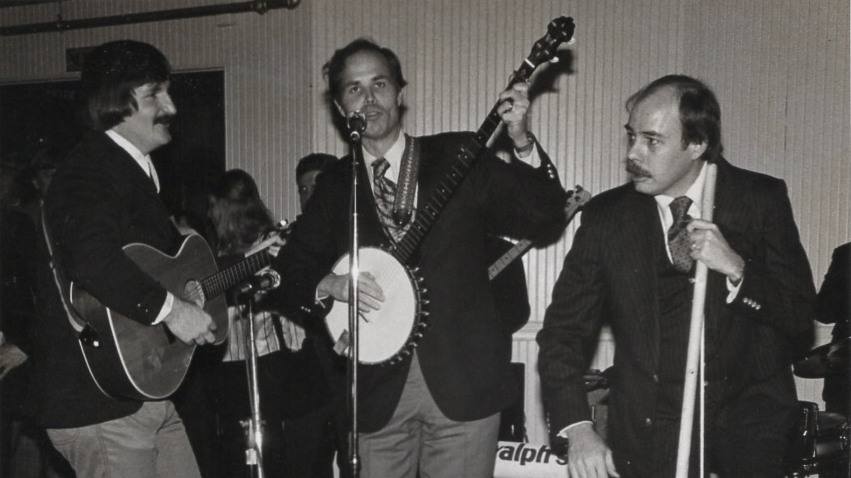
trio playing banjo, guitar, washtub bass
2 of 2

Robert Westlake (center) with psychology intern Kelly Brownell (left) and faculty member Robert Fowler (right). When Westlake arrived at the new department, he said, “I looked around and thought, ‘Where is everybody? Where’s the faculty?' It became clear there were just a few of us. We had to make everything out of whole cloth. It was fun and exciting, but very stressful.” Photo courtesy of Butler Hospital.

A House (Experimentally) United

In 1973, Ben Feather recruited Robert Westlake, M.D., a young psychiatrist from the University of Pennsylvania, to take a faculty position in the brand-new department. 

“When I met with him, he was extremely impressive and visionary,” Westlake remembered. “He talked about founding a department that would combine psychiatry and psychology. It was extremely rare.”

In the standard clinical model of the time, the fields operated individually. Psychiatrists typically led a patient’s diagnosis and treatment, while psychologists conducted assessments. But Feather, who held doctoral degrees in both fields, supported integrating the two as equal and complementary domains.

Feather rolled out the integrated model at Butler Hospital, where the department’s first training programs were based. (In addition to being department chair, Feather was also Butler’s executive director.) Psychiatry residents and psychology interns both admitted patients, they were supervised by a team of faculty from both fields, and psychology interns took call nights and weekends just like psychiatrists.  

“I suspect most of the staff was sort of surprised — like who are these PhD people running around with the MDs?” said Carol Landau, Ph.D., one of the original psychology interns. “I never worked as hard in my life. It was great.”

That cooperative spirit continues to define the department, where psychiatrists and psychologists frequently collaborate with each other and with colleagues in public health, cognitive science, molecular and cell biology, and neuroengineering. 

Faculty and trainees in the department’s Community and Belonging Council work to create a welcoming environment through such initiatives as non-evaluative mentoring, social gatherings, and personalized welcomes to new faculty. The Council also strives to build a culture of respect with the wider community. Currently, they are creating an advisory board of community members to guide the department’s research and clinical care.

Belinda Borrelli, Ph.D., an alum of the department’s clinical psychology training programs, echoed these values in her academic presentation that concluded the 50th celebration. Borrelli, now a professor at Boston University, talked about developing digital technologies that can motivate life-changing health behaviors. She has designed these interventions in collaboration with community members and with fellow researchers at Brown.

“Brown has been a very special place for all of us,” she said. “It’s not simply where I trained. It's where I became a psychologist; it's where I became a scientist; it's where I learned to think about the big vision. It's also where I have formed friendships and professional relationships that have spanned decades.”

50th Celebration & Reunion

Brown University
Providence RI 02912 401-863-1000

Quick Navigation

  • Division of Biology and Medicine
  • Program in Biology
  • Affiliated Hospitals

Footer Navigation

  • Events
  • Maps and Directions
  • Contact Us
  • Accessibility
Give To Brown

© Brown University

The Warren Alpert Medical School
For You
Search Menu

Mobile Site Navigation

    Mobile Site Navigation

    • Home
    • About
      • Leadership
      • Administrative Staff
      • Affiliated Hospitals
      • Life in Providence
    • Research
      • Research Centers
      • Research Core Facilities and Resources
      • Research Affiliates
    • Education
      • Residency Programs
      • Fellowship Programs
      • Clinical Psychology Training Programs
      • Research Training
    • Clinical Programs
    • Faculty
      • Faculty Affairs
      • Faculty Awards
      • Find a Faculty Researcher
      • Find a Clinical Faculty Member
    • Belonging
      • Actions to Promote Belonging
      • Community and Belonging Council
      • Faculty and Trainee Resources
      • Communities of Rhode Island
    • News & Events

Mobile Secondary Navigation Navigation

  • Give Now
All of Brown.edu People
Close Search